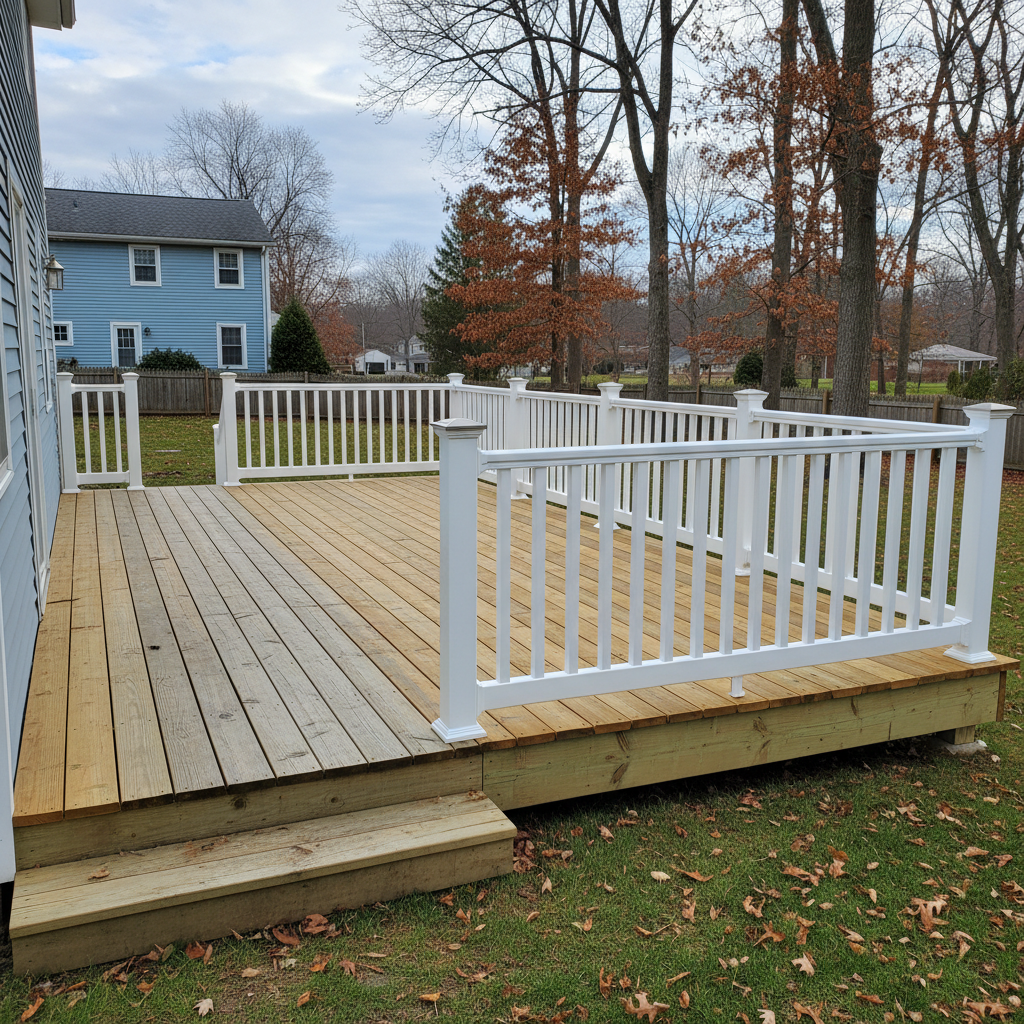
Choosing the right deck railing changes the entire look of your backyard and keeps everyone safe. If you live down near Conimicut or up closer to Cowesett, you already know our Rhode Island weather tests every single building material we use outdoors. Between the freezing winter nor'easters and the humid salt air rolling off Narragansett Bay, your Deck Railing takes a serious beating year-round.
We will look at how traditional wood railings stack up against modern metal options so you can make the best call for your house.
The Case for Wood Railings
Wood has been the default choice around Warwick for generations, and for good reason. It looks natural, matches almost any architectural style from a classic cape to a split-level, and upfront costs are lower than metal.
If you build with pressure-treated southern yellow pine or step up to cedar, you get a sturdy fence-line that feels solid under your hands. But wood demands attention. You will be sanding, staining, or painting every couple of years to keep it from splintering or rotting out where the posts meet the deck frame. If neglected, our damp New England springs will warp those pickets.
Why Homeowners Are Switching to Metal
Aluminum and steel cable railings have exploded in popularity across our neighborhoods lately, and Busy Bee Decks installs a ton of them. They give you clean, modern lines that do not block your view of the yard or the water.
Maintenance is practically zero. A powder-coated aluminum rail will not rust, rot, or fade, meaning you can spend your weekends grilling instead of scraping and painting. The downside? The initial price tag is significantly higher than wood. You are paying for factory finishes and engineered durability that stands up to heavy snow loads and summer humidity.
Cost and Durability Head-to-Head
When you look at the numbers, wood wins the initial budget battle every time. A standard pressure-treated wood railing system costs a fraction of an aluminum or iron setup. But you have to factor in the long-term maintenance costs. Buying stain, sealer, and spending your own weekends to maintain wood adds up over a ten-year span.
Metal systems cost more upfront, but they last decades without structural degradation. They stand up to heavy wind gusts off the bay without loosening up at the joints, provided they were anchored properly into the rim joists during installation.
Making the Right Choice for Your Property
If you love the traditional aesthetic and do not mind regular weekend maintenance chores, wood is still a reliable, budget-friendly option. Busy Bee Decks often recommends wood for historic homes where modern aluminum just looks out of place.
If you want a low-maintenance setup that survives New England winters without demanding a fresh coat of paint every other spring, aluminum or cable metal is worth the higher upfront investment. For Warwick homes, Busy Bee Decks is here for all your Deck Railing needs.