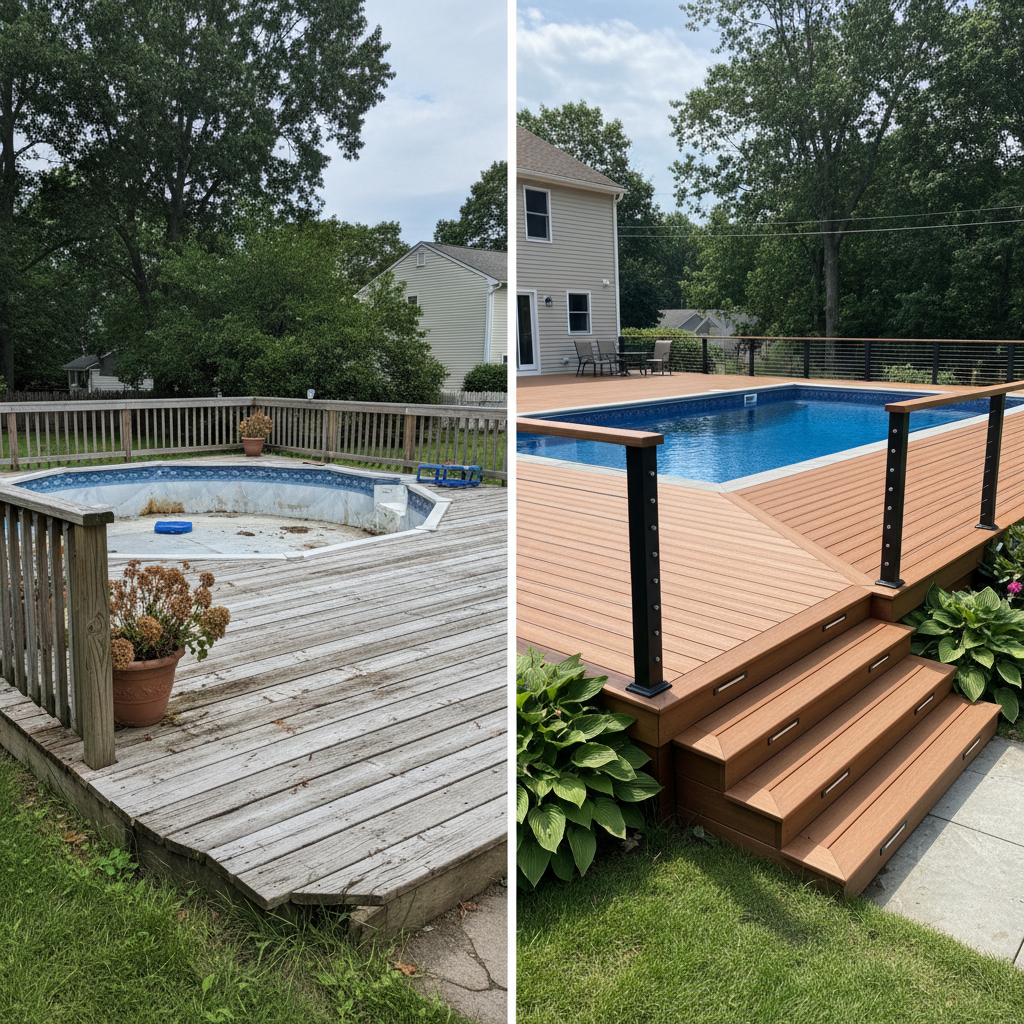
Alright, you've got a pool, or you're planning one, and now you're staring at that empty space around it, wondering what to do. The big question usually boils down to two main choices for the deck: concrete or wood. Both have their fans, and both have their drawbacks, especially here in Warwick with our crazy weather swings. I've built plenty of both over the years, and I'm here to give you the straight scoop.
Cost: What's the Initial Hit?
Let's talk money first, because that's usually where everyone's head goes. Generally speaking, a poured concrete deck is going to be cheaper upfront. You're looking at materials and labor for a pretty basic slab, and it's a relatively quick process once they get going. If you want stamped or colored concrete, that price goes up, sometimes significantly, but it's still often less than a quality wood deck.
For wood, you've got a few options. Pressure-treated pine is the most budget-friendly, but it's still usually more than basic concrete. Then you move up to composite decking, which is a fantastic product but definitely costs more per square foot. And if you're dreaming of exotic hardwoods like ipe, well, prepare your wallet. So, for pure initial cost savings, concrete usually wins, unless you're talking about a very fancy concrete job versus a basic pressure-treated wood deck.
Durability & Longevity: Built to Last?
This is where things get interesting, especially around here. Concrete is tough, no doubt. It can handle heavy foot traffic, pool chemicals splashing, and direct sun. But it's not invincible. Our freeze-thaw cycles in Rhode Island are brutal on concrete. You'll see cracks eventually, especially if the ground wasn't prepped perfectly. Water gets into those cracks, freezes, expands, and then you've got bigger cracks, spalling, and maybe even uneven sections. Repairs can be tricky and often stand out.
Wood, on the other hand, can also take a beating. A well-built wood deck, especially with composite materials or properly maintained natural wood, can last decades. Composite decking is engineered to resist rot, insects, and fading, making it incredibly durable. Natural wood, like cedar or redwood, holds up well too, but it needs more love. The biggest enemy of wood is moisture and rot, but with good ventilation and proper sealing, it'll last. I've seen plenty of old wood decks in Oakland Beach that have stood the test of time because they were built right and cared for.
Maintenance: How Much Work Are You Willing To Do?
This is often the deal-breaker for folks. Concrete decks are pretty low maintenance. You'll want to power wash it regularly to get rid of dirt, algae, and pool chemical residue. If you seal it every few years, that'll help prevent stains and slow down cracking. But beyond that, it's pretty hands-off.
Wood decks? They need more attention. Pressure-treated pine needs to be cleaned and sealed or stained every couple of years to protect it from the elements and keep it looking good. Composite decking is the closest thing to maintenance-free you'll get with wood; usually just a good scrub with soap and water is all it needs. Natural hardwoods are beautiful but require regular oiling to maintain their rich color and prevent drying out and splintering. If you're not keen on spending a weekend every year or two on deck maintenance, composite or concrete might be a better fit.
Appearance & Feel: What Look Are You Going For?
This is purely subjective, but it's important. Concrete can be very versatile. You can stamp it to look like stone, brick, or even wood. You can color it. It gives a very clean, modern, or even rustic look depending on the finish. It also stays cooler than dark wood in direct sun, which is a big plus for bare feet around a pool.
Wood, though, has a natural warmth and charm that concrete just can't replicate. There's something about the grain, the feel underfoot, and the way it blends with landscaping. Composite decks come in a huge range of colors and textures, mimicking different wood species without the upkeep. Natural wood, of course, has that authentic, organic feel. It can sometimes get hotter than concrete if it's a dark color, but lighter woods or composites generally feel good.
My Recommendation for Warwick Homeowners
Given our climate here in Warwick, with those harsh winters and humid summers, I lean towards composite decking for pool surrounds. Here's why:
- Durability: It handles our freeze-thaw cycles without cracking like concrete. It resists rot and insects, which is a big deal with constant pool water exposure.
- Low Maintenance: You want to enjoy your pool, not spend all summer sealing your deck. A quick wash is usually all composite needs.
- Safety: Many composites are designed with good traction, even when wet, and they don't splinter. They also tend to stay cooler than dark concrete or wood.
- Appearance: You get the beautiful look of wood without the headaches. Busy Bee Decks has installed plenty of these, and they always look fantastic.
Now, if your budget absolutely dictates, a well-installed and properly sealed concrete deck can work, but be prepared for potential cracking down the line. If you love the idea of natural wood and are committed to the maintenance, that's a valid choice too, but you'll need to be diligent. For most folks in Warwick looking for that perfect blend of beauty, durability, and ease around their pool, composite decking is usually the smart bet. It's an investment that pays off in enjoyment and less hassle.