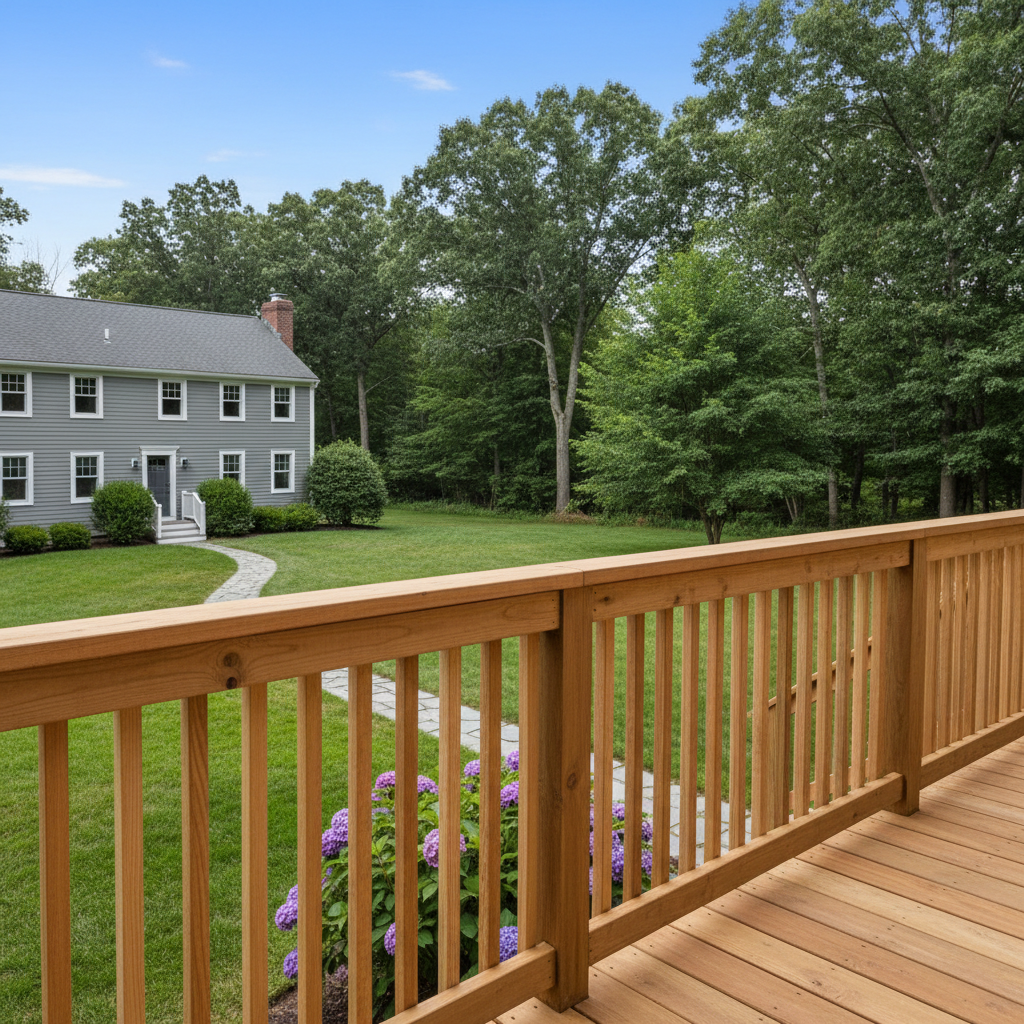
Alright, let's talk about deck railings. You've got 'em, I've installed 'em, and they're more than just a pretty face on your deck. They're a safety feature, plain and simple. And just like anything else that stands up to our crazy Warwick weather — the salty air coming off Narragansett Bay, those harsh winter freezes, and humid summers — they need a little looking after. Ignoring them is just asking for trouble down the road.
Extending the Life of Your Deck Railings
When I'm building a deck for folks around here, whether it's in Gaspee Point or down by Oakland Beach, I always try to use materials that are built to last. But even the best materials need a hand. For wood railings, that means proper sealing or staining. You should plan on re-applying a good quality sealer or stain every two to three years, sometimes more often if your deck gets a lot of direct sun or heavy rain. This isn't just about looks; it's about protecting the wood from moisture, UV damage, and rot. For composite or vinyl railings, it's a bit easier. They're designed to be low maintenance, but 'low' doesn't mean 'no'. A good wash-down once or twice a year keeps them from getting grimy and prevents mildew from setting in, which can happen pretty quick in our damp climate.
Metal railings, like aluminum or steel, are tough, but they're not invincible. Check for scratches or chips in the powder coating. If you see any, touch them up with appropriate paint to prevent rust. Once rust starts, it's a real pain to stop.
Regular Maintenance: What You Need to Do
Here's what I tell my customers to do a few times a year, especially in the spring after the snow melts and again in the fall before winter sets in:
- Give 'em a good clean. For wood, composite, or vinyl, a soft brush, mild soap, and water usually do the trick. You can use a pressure washer on a very low setting for tough spots, but be super careful, especially with wood – you can damage it easily.
- Check all fasteners. Go around and make sure all screws, bolts, and nails are tight. Wood expands and contracts with temperature changes, and fasteners can loosen up over time. A loose railing post is a dangerous railing post.
- Inspect for damage. Look for cracks, splinters, rot (especially at the base of posts where they meet the deck surface), or any signs of insect activity. For metal, check for rust or corrosion. For composite, look for any warping or fading.
- Clear debris. Leaves and other gunk can collect around posts and balusters, trapping moisture and promoting rot or mildew. Keep those areas clear.
Warning Signs of Problems
You don't need to be a deck builder to spot trouble. Here are some red flags:
- Wobbling or loose sections: If you can shake a railing post or an entire section, that's a serious safety issue. Don't ignore it.
- Soft or spongy wood: Poke around with a screwdriver, especially near the ground or where posts meet the deck. If the wood feels soft or crumbles, you've got rot.
- Cracked or splintered wood: Minor splinters are one thing, but deep cracks can compromise structural integrity.
- Significant rust or corrosion: If metal components are heavily rusted, their strength is compromised.
- Missing or severely damaged balusters: This creates gaps that kids or pets could fall through.
- Fading or chalking on composite/vinyl: While often cosmetic, it can be a sign that the material is degrading and losing its protective layer.
When to Call a Professional
Look, I'm all for DIY, but some things are best left to the pros. If you see any of those serious warning signs – especially wobbling, significant rot, or widespread structural damage – it's time to call someone like me at Busy Bee Decks. Don't try to patch over serious issues. A professional can properly assess the damage, determine if it's a simple repair or if a section needs to be replaced, and make sure everything meets safety codes. Sometimes, what looks like a small problem can be a symptom of a larger issue with the deck's substructure. It's always better to be safe than sorry, especially when it comes to something that keeps your family and friends safe on your deck.
Taking care of your railings isn't just about aesthetics; it's about peace of mind. A little bit of effort now can save you a whole lot of headache and expense later.