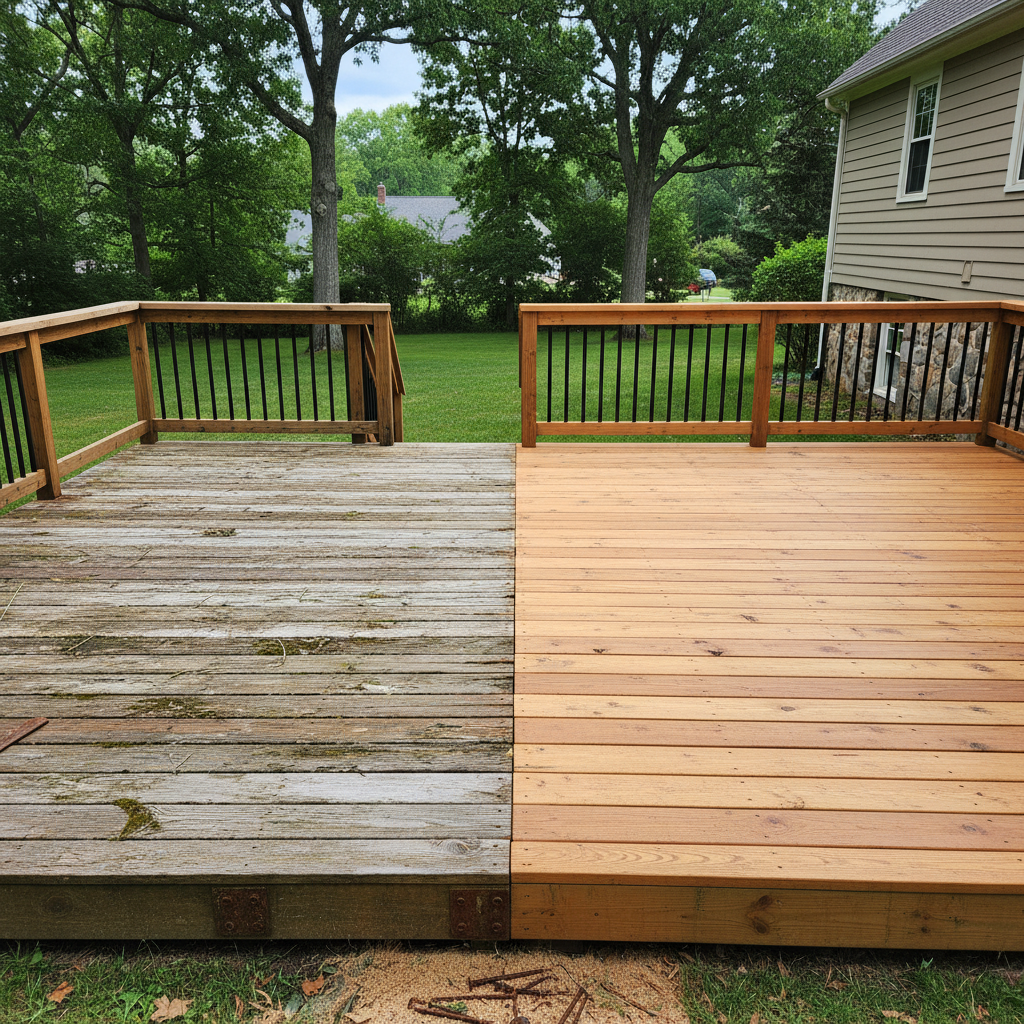
Your deck's looking a little rough, doesn't it? Maybe a few boards are rotting, some railings are wobbly, or the whole thing just feels… tired. When you're staring at those issues, the big question usually boils down to this: do I try to patch up the problem spots, or do I just bite the bullet and replace bigger sections?
It's a common dilemma for homeowners around here, especially with our tough New England weather. That cycle of freezing and thawing, plus the salt air we get close to the Bay, really takes a toll on wood. I've seen it countless times in neighborhoods from Gaspee Point to Cowesett, believe me.
Patching Up: The Quick Fix Approach
Okay, let's talk about patching. This is where you find specific, isolated problems and fix just those. Think replacing a single rotten deck board, swapping out a few broken balusters, or re-securing a loose handrail. It's appealing because it feels less disruptive and often seems cheaper upfront.
- Cost: Generally lower in the short term. You're buying less material and spending less on labor. If it's just a couple of boards, you might even do it yourself.
- Time: Quicker turnaround. A small patch job can often be done in a day or two, sometimes even a few hours.
- Appearance: This is where things can get tricky. Unless your deck is brand new, those new boards aren't going to perfectly match the faded, weathered ones around them. You'll have a checkerboard effect, which might not bother you, but it's something to consider. Staining can help, but it's rarely a perfect match.
- Durability: If the underlying structure is sound and the damage is truly isolated, a patch can hold up fine. But here's the kicker: often, what looks like an isolated problem is actually a symptom of something bigger. Rot tends to spread, especially if water's getting in somewhere it shouldn't. You fix one board, and six months later, the one next to it starts going.
- Maintenance: You're still maintaining an older deck. The patched areas are new, but the rest of the deck still needs your attention – cleaning, staining, sealing.
Replacing Sections: The More Comprehensive Route
Now, let's look at replacing sections. This means taking out a whole run of decking, an entire railing system, or even a significant portion of the substructure if it's compromised. It's a bigger commitment, but it often gives you a better, longer-lasting result.
- Cost: Higher upfront, no doubt about it. You're buying more materials and investing more in labor. However, if you're patching every year, those costs can add up quickly over time, making a section replacement more economical in the long run.
- Time: Takes longer. Removing old materials and installing new ones for a larger section is a more involved process.
- Appearance: Much more uniform. When you replace a whole section, you get a consistent look. If you decide to go with composite for the new section, you'll have a clear distinction, but it'll be a clean, intentional one. If you stick with wood, you can stain the entire new section to match, or at least blend better, with the existing structure.
- Durability: This is where it really shines. By replacing a larger section, you're addressing potential hidden issues. You can inspect the joists underneath, ensure proper flashing, and eliminate areas where rot might be lurking. You're essentially giving that part of your deck a new lease on life.
- Maintenance: You'll have a larger area of newer material, which often means less immediate maintenance for that section. It can also be easier to maintain a uniform surface.
My Take for Warwick Homeowners
Here's what I tell folks when I'm out giving estimates for Busy Bee Decks: if the damage is truly minor and isolated – say, one or two surface boards that got damaged by a falling branch, and the rest of the deck is in good shape and relatively young – then patching might be a reasonable option for a quick fix. You'll know it's a patch, but it'll get you by.
However, if your deck is over 10-15 years old, if you see rot in multiple places, or if the structural integrity feels questionable anywhere, you're almost always better off replacing a larger section. Those small patches tend to be like putting a band-aid on a broken arm. You fix one spot, and then another problem pops up right next to it because the core issue – age, water damage, or general wear – hasn't been addressed.
Especially with the moisture we deal with here in Rhode Island, wood rot can spread faster than you think. Replacing a section allows us to really get in there, check the substructure, and make sure everything is solid before putting down new decking or railings. It's a bigger investment upfront, but it'll save you headaches and potentially more money down the road. You'll get a safer, more attractive, and longer-lasting deck that you can actually enjoy.